Honest Review, Earnings Potential & Whether Skool Is Legitimate
TL;DR: Yes, you can make real money with Skool communities. No, Skool is not a scam. It’s a legitimate platform used by thousands of coaches, course creators, and consultants worldwide.
The most common ways people earn on Skool are paid memberships, coaching programs, courses, masterminds, and affiliate marketing. Even a small community of 50 members at $49/month generates $2,450 in recurring monthly revenue.
That said, Skool is a tool, not a shortcut.
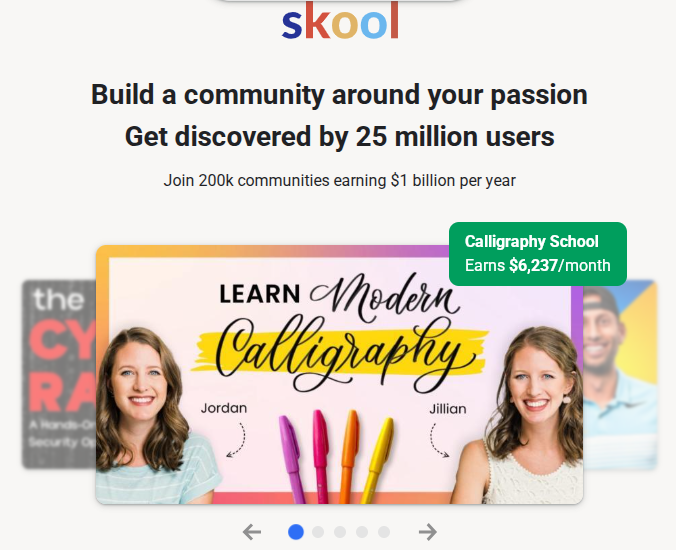
If you’ve been spending any time researching online business ideas lately, chances are you’ve stumbled across Skool.
Coaches, consultants, course creators, and side hustlers are talking about it everywhere — on YouTube, Instagram, X, and Reddit. Some are showing income screenshots. Others swear it changed their business entirely. And then there are the skeptics, calling the whole thing overhyped nonsense driven by affiliate marketers chasing commissions.
So which is it?
Can you really make money with Skool communities?
And is Skool actually legitimate or is it just another platform designed to part you from your money?
Here’s the short version: yes, people are earning real, recurring income through Skool communities. And no, Skool is not a scam. It’s a genuine software platform used by thousands of coaches, educators, and community builders around the world.
But, and this matters, the money doesn’t come from Skool itself. It comes from the value you create for your members. The platform is simply the tool.
In this post, we’ll break down exactly how people make money on Skool, what realistic income looks like, what the real success stories are built on, where things go wrong, and whether this platform deserves a place in your online business.
If you’re brand new to the platform and want to understand what it actually is before reading about monetization, start with our guide: What Is Skool and How It Works – then come back here.
What Is Skool? (Quick Overview)
Skool is an all-in-one community platform that combines online communities, course hosting, live events, gamification, and member engagement tools into a single place.
Instead of stitching together a Facebook Group, a Teachable course, a Zoom calendar, and a Slack channel, you run everything under one roof. Members log in, participate in discussions, access your training, show up to events, and earn points for staying engaged – all in the same space.
The platform has become especially popular with:
- Coaches and consultants
- Course creators
- Freelancers and agency owners
- Online educators and content creators
- Anyone turning expertise into a business
The core appeal is simple: Skool makes it easier to build a community people are genuinely willing to pay for. Check out Skool here.
Can You Really Make Money With Skool Communities?
Yes. Full stop.
But let’s be honest about what that actually means.
People aren’t making money because they use Skool. They’re making money because they’ve built valuable communities that solve specific, meaningful problems for a defined group of people. Skool is the vehicle – but the destination, the route, and the fuel are all on you.
Think of it like this: buying a car doesn’t make you a successful Uber driver. You still need to know where you’re going, how to drive, and how to treat your passengers. The car just makes the job possible.
The creators who succeed on Skool have usually done three things well:
- They’ve identified a specific audience with a specific problem
- They’ve created an offer that genuinely helps that audience
- They’ve shown up consistently enough to earn trust
When those three things are in place, Skool becomes a powerful recurring revenue engine. When they’re not, it becomes an expensive experiment.
5 Ways People Make Money on Skool
1. Paid Membership Communities
This is the most popular model on the platform, and for good reason – it creates predictable, recurring income.
Members pay a monthly or annual subscription to access exclusive content, training, networking, accountability, and expert guidance. Niches range from business and marketing to fitness, investing, freelancing, and beyond.
Most community owners charge somewhere between $19 and $99 per month. Here’s what that looks like at different sizes:
| Members | Monthly Fee | Monthly Revenue |
|---|---|---|
| 25 | $29 | $725 |
| 50 | $49 | $2,450 |
| 100 | $49 | $4,900 |
| 250 | $49 | $12,250 |
| 500 | $99 | $49,500 |
These are gross revenue numbers – not profit. You’ll still need to account for platform fees, marketing costs, content creation time, and any team members you bring on. But the recurring model is what makes this attractive: you’re not starting from zero every month.
2. Coaching Programs
Many coaches use Skool as the central hub for their client work. Instead of managing coaching clients through a patchwork of tools – email threads, private Facebook groups, Google Docs, Zoom links – everything lives in one place.
This approach works particularly well for coaches charging $500 to $2,000+ per client. At that price point, even a handful of active clients more than covers the platform cost, and the centralised experience feels more professional to clients.
Common coaching niches on Skool include business coaching, career coaching, mindset coaching, health and fitness coaching, and relationship coaching.
3. Selling Courses
Skool lets you host structured course content directly inside your community. Members work through lessons while participating in discussions, asking questions, and getting accountability from both the community owner and their peers.
This combination tends to produce better course completion rates than standalone course platforms. When people are surrounded by others working toward the same goal, they’re simply more likely to follow through. Accountability is one of the most underrated learning tools out there.
4. Mastermind Groups
Masterminds are priced significantly higher than standard memberships – and the value proposition is different too. You’re not just selling access to content. You’re selling access to peers, relationships, strategy, and collective knowledge.
Some masterminds on Skool charge $99/month. Others charge $299, $500, or even $1,000+ per month. The price point depends on the calibre of members, the level of access to the host, and the outcomes the mastermind is designed to produce.
5. Affiliate Marketing
Many community owners generate additional income through affiliate commissions – recommending tools, software, and platforms they genuinely use and believe in.
The Skool affiliate program itself is one example. When someone joins Skool through your referral link, you earn recurring commissions as long as they remain a paying customer. This creates a revenue stream that runs alongside your membership income.
For a deeper look at how this model works, check out our guide: Affiliate Marketing
How Much Can You Realistically Make on Skool?
This is probably the most searched question around Skool – and the honest answer is: it depends enormously.
Some communities earn nothing. Others generate six or even seven figures annually. The range is genuinely that wide, which is why the income screenshots you see on social media can be so misleading without context.
Here’s a more grounded breakdown by stage:
Early stage (0–50 members): This is the validation phase. You’re testing whether people will pay for what you’re offering, getting feedback, and learning what your community actually needs. Revenue at this stage is modest, but the lessons are invaluable.
Growth stage (50–200 members): With a proven offer and engaged community, you’re now generating meaningful recurring income – typically $2,000 to $10,000+ per month depending on your pricing.
Scale stage (200+ members): At this point, communities can generate serious revenue, and the recurring nature of membership income means growth compounds over time.
One important reality check: revenue is not profit. Once you subtract marketing spend, content creation costs, team support, and payment processing fees, your actual take-home will be lower. Plan for this from the start rather than being caught off guard.
For beginners, the realistic first goal is getting your first 10 paying members. Those first 10 validate your concept, give you feedback, and give you the confidence to keep building.
Real Skool Success Stories
The internet is full of Skool success stories – and while not every claim should be taken at face value, there are consistent patterns among the communities that genuinely succeed.
Business Education Communities
These are among the most common success stories on Skool. Entrepreneurs teaching lead generation, marketing, sales, and online business strategy have built communities that combine weekly calls, structured courses, templates, and peer accountability. The combination of content and community creates strong retention because members see ongoing results.
Fitness Communities
Fitness coaches have found Skool particularly effective for client retention. Members follow workout plans and nutrition guidance, but more importantly, they stay because of the accountability and social connection with other members. Fitness is a domain where community-driven progress genuinely outperforms solo efforts.
Creator and Content Communities
YouTube growth, personal branding, social media strategy, and content creation are all popular niches. The shared learning environment creates ongoing value – members are learning alongside people who are facing the same challenges at the same time.
Skill-Based Communities
Copywriting, freelancing, graphic design, web development, and AI tools are all thriving niches. Members join to sharpen a specific skill and connect with others on the same path. The community element accelerates learning in ways that courses alone cannot.
What separates the communities that succeed from the ones that don’t isn’t usually the niche – it’s the commitment of the owner to show up, create value, and genuinely invest in their members’ outcomes.
Why Some Skool Communities Fail
This part doesn’t get talked about enough. Not every Skool community works out, and understanding why is just as important as understanding what success looks like.
No clear niche. Trying to serve everyone usually results in resonating with no one. The communities that gain traction tend to be specific – “freelance designers building retainer clients” outperforms “online business community” almost every time.
Weak value proposition. People don’t pay for access to a community. They pay because the community helps them achieve something specific. If your offer doesn’t clearly articulate what outcome members will get, the pricing conversation becomes very difficult.
No existing audience. Even the best offer struggles without visibility. Many of the most successful Skool community owners had something before they launched – an email list, a social media following, a YouTube channel, or an existing client base. Starting completely from scratch is possible, but it takes longer and requires more consistent content creation.
Poor engagement. Communities die when conversations stop. Owners who treat Skool as a passive income machine quickly find that members don’t stick around when no one is showing up. Community building requires active participation, especially in the early months.
Unrealistic expectations. Some creators expect passive income from day one. It doesn’t work that way. Building a successful paid community takes time, consistency, iteration, and genuine care for your members. The recurring revenue model is powerful – but it’s a result of doing the work, not a shortcut around it.
Is Skool a Scam or Legitimate?
Let’s answer this directly: Skool is legitimate.
A scam involves deliberate deception – false promises, hidden fees, or taking money without delivering anything of value. Skool is none of those things. It’s a software platform with transparent pricing, real customers, and a clear product.
Whether users succeed on Skool has nothing to do with the platform being a scam. It has everything to do with what individual community owners bring to the table.
Why Some People Think Skool Is a Scam
Heavy affiliate promotion. Skool has an affiliate program, and a lot of creators promote it through referral links. When you see the same platform recommended by dozens of people – often with enthusiastic claims – it can feel like coordinated marketing rather than genuine endorsement. That skepticism is understandable.
Income screenshots everywhere. Social media is flooded with screenshots of Skool revenue dashboards showing impressive monthly numbers. What’s rarely shown is the years of audience building, business development, and trial and error that went into those results.
Misleading marketing claims. Some marketers genuinely imply that signing up for Skool will result in financial success. That’s misleading, and it’s not Skool’s fault – it’s the fault of how some affiliates promote it. The platform is a tool. The success comes from what you build with it.
Why Skool Is Legitimate
Transparent pricing. You know exactly what you’re paying – there are no hidden charges or bait-and-switch tactics.
Real customers, real communities. Thousands of people actively use the platform to deliver real coaching programs, courses, and communities. The product works as advertised.
Established business model. Skool earns revenue from subscriptions. It’s a SaaS product, not a pyramid scheme.
Genuine use cases. Coaches, educators, consultants, and entrepreneurs are using Skool to deliver real value to real paying members every day.
Skool Reviews: What Users Actually Think
Based on community feedback from active users, here’s what people consistently highlight:
What users love:
- The simplicity of the interface. it’s genuinely easy to navigate for both owners and members
- Gamification features that reward engagement and make the community feel alive
- Having courses and community in a single place, which reduces friction for members
- A more focused environment compared to Facebook Groups, where members aren’t pulled into unrelated content
Common complaints:
- The monthly subscription cost can feel steep for beginners who haven’t yet validated their offer
- Limited design customisation compared to platforms like Kajabi
- The community requires active management – it doesn’t run itself
- Not every business model is a natural fit for the platform
No platform is perfect. Whether Skool’s tradeoffs work for you depends on what you’re building and who you’re building it for.
Skool vs Facebook Groups
Facebook Groups are free. Skool Communities are not. That’s the first objection most people have – and it’s worth addressing properly.
Facebook Groups advantages:
- Free to use
- Massive existing user base
- Low barrier to entry for members
Facebook Groups challenges:
- Algorithm limits your reach to your own members
- Members face constant distractions and competing notifications
- You don’t own the platform or the data
- Monetisation requires external tools
- The environment isn’t optimised for learning or structured community
Skool advantages:
- Focused, distraction-free environment
- Built-in course hosting
- Gamification that drives engagement
- Stronger monetisation tools
- You control the member experience
For many creators, the shift from a free Facebook Group to a paid Skool community is the moment their business model actually becomes sustainable. The platform cost is real, but so is the quality of the environment it creates.
For a detailed head-to-head comparison, see our article: Skool vs Facebook Groups
Alternatives to Skool
Skool isn’t the only option in the community platform space. Here are the main alternatives worth knowing:
Circle — Known for more design flexibility and customisation options. A strong choice for creators who want more control over how their community looks and feels.
Kajabi — An all-in-one platform built around marketing funnels, email automation, and course delivery. More complex, but more powerful for creators with sophisticated sales and marketing needs.
Mighty Networks — Strong community-building tools with flexible options. A popular choice for creators who prioritise community features over course delivery.
Facebook Groups — Still a viable starting point for creators testing ideas before committing to a paid platform. The limitations become apparent quickly once you start monetising.
The best platform depends on your goals, your audience, your budget, and how important community engagement is relative to course delivery.
Who Should Use Skool?
Skool is a strong fit for:
- Coaches and consultants who want a professional home for their client work
- Course creators who want to add community and accountability to their programs
- Freelancers and agency owners building a paid community around their expertise
- Online educators who want to combine structured learning with ongoing engagement
- Anyone turning specific knowledge or experience into a recurring revenue stream
As an active community owner myself, I can tell you the biggest opportunity isn’t just creating a community – it’s creating a place where people make genuine progress toward something they care about. When that happens, retention takes care of itself.
Who should probably wait:
- Anyone who hasn’t yet identified a clear niche or validated their offer
- Those expecting passive income from day one without consistent engagement
- Creators who aren’t willing to actively participate in their community
Skool rewards creators who show up. If you’re not ready to do that yet, it might be worth building your audience and validating your idea first.
Final Verdict
Can you really make money with Skool communities?
Yes – but the money comes from the value you provide, not from the platform itself. Skool gives you the infrastructure. You bring the expertise, the offer, and the commitment to your members.
Is Skool a scam or legitimate?
It’s completely legitimate. It’s a well-built software platform used by thousands of coaches, course creators, and consultants around the world. The hype around it is sometimes overblown, but the product itself is real, the pricing is transparent, and the communities that succeed on it are delivering genuine results to genuine people.
If you’re a coach, consultant, course creator, or someone sitting on expertise you haven’t yet monetised, Skool is worth taking seriously.
Ready to explore the platform? → Try Skool here
Not sure what knowledge or experience you could turn into a community? Join Digital Quick Start – where I help beginners figure out what they know, who they can help, and how to build a real income around it.
And if you want a structured path for turning your expertise into a profitable offer, check out Turn What You Know Into Income inside Digital Quick Start Classroom
Frequently Asked Questions
Can beginners make money with Skool?
Yes – but success depends on solving a specific problem consistently. Beginners who win on Skool typically start with a very focused niche, keep their initial price accessible to validate demand, and grow from there. The platform itself isn’t the challenge; clarity of offer is.
How many members do you need to make money on Skool?
Even 20 to 50 paying members can generate meaningful monthly income depending on your pricing. At $49/month, 50 members is $2,450 per month recurring. The goal isn’t a huge community – it’s the right community.
Is Skool worth it in 2026?
For coaches, consultants, and course creators who value community-driven learning and want recurring revenue, the answer for most people is yes. The platform has continued to grow, the product has improved, and the business model it enables is genuinely sound.
Do you need an audience before starting?
Not necessarily – but having one accelerates growth significantly. Many successful community owners launched to their existing email list, social media following, or client base. If you’re starting from scratch, plan for a longer runway and focus on organic content to build visibility.
Can you use Skool for affiliate marketing?
Yes. Many community owners use affiliate marketing as an additional income stream alongside their membership. The Skool affiliate program itself is a common example – recommending a platform you actively use to an audience that trusts your judgment is a natural fit.
What is the average income of a Skool community owner?
There’s no standard average, and any specific number would be misleading. Earnings range from zero for communities that never gain traction to tens of thousands of dollars per month for established communities with strong offers. The distribution is not even.
Is Skool better than Facebook Groups?
It depends on what you’re building. Facebook Groups are free and have a lower barrier to entry, but they come with significant limitations around monetization, distraction, and member experience. Skool provides a more focused, professional environment, but it costs money and requires an offer people will actually pay for.
Looking for a place to start? Join Digital Quick Start and learn how to turn what you know into income – even if you’re starting from zero.