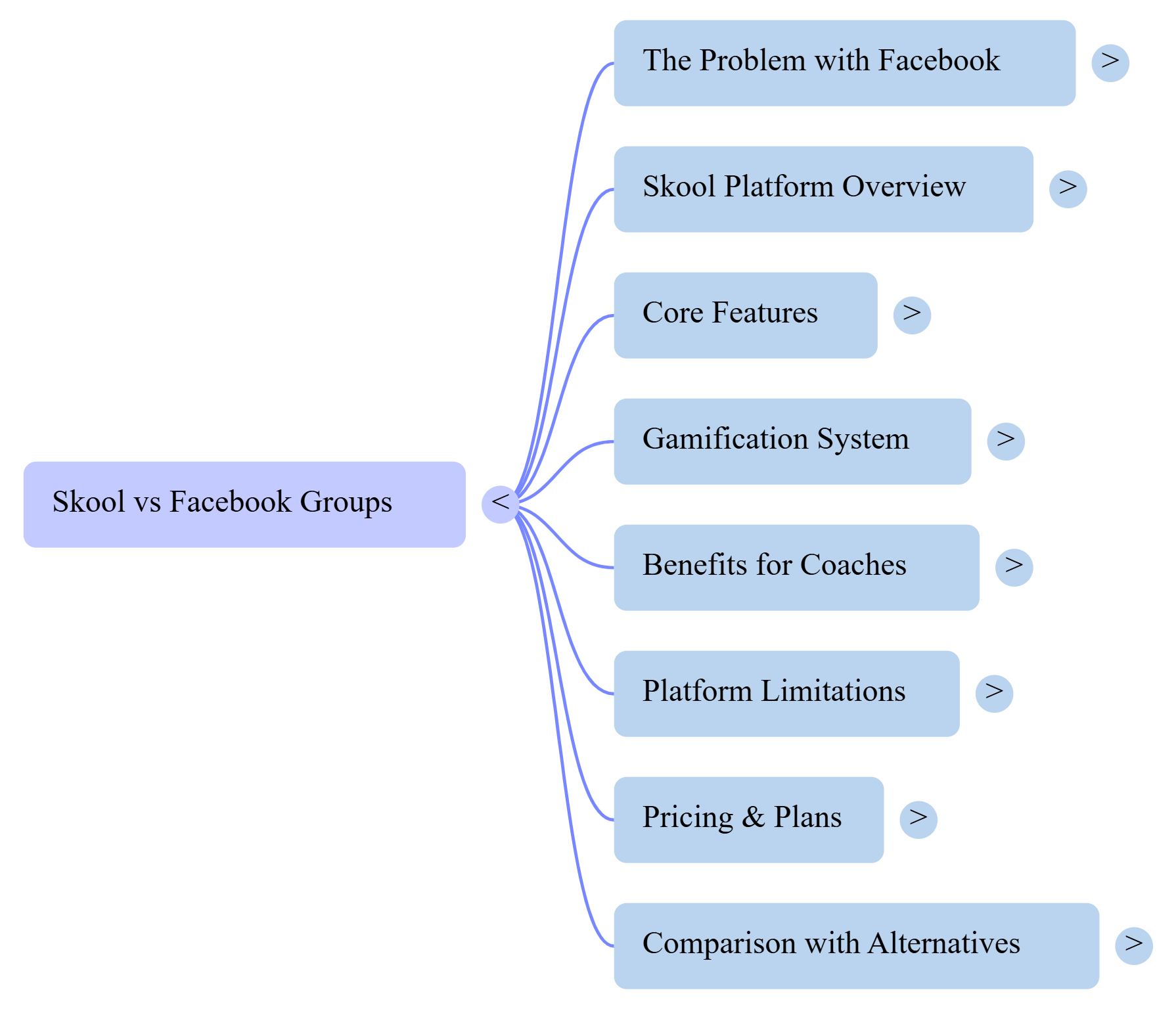
Skool Explained: Everything You Need to Know to Get Started and Succeed
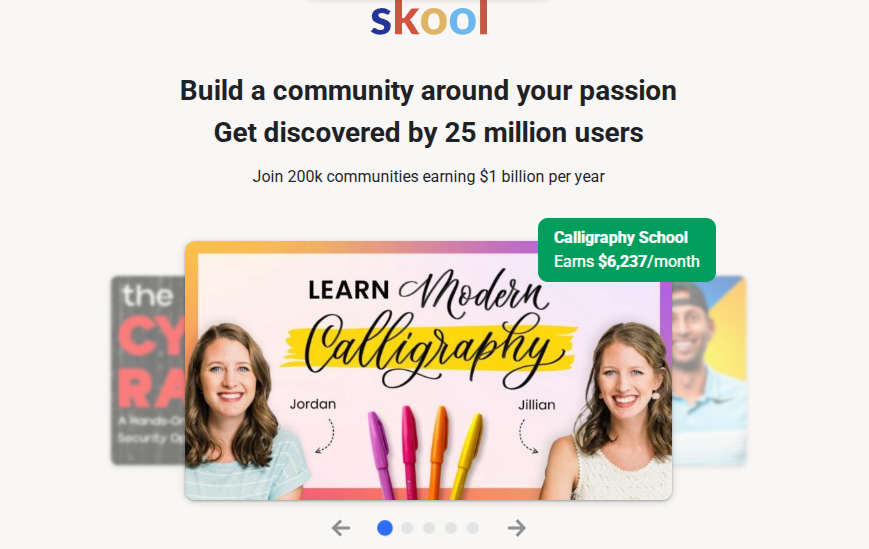
Introduction – You’re Building on Rented Land
Imagine spending months or years building a thriving community. You post consistently, you nurture conversations, you show up every day. And then one day, the algorithm changes. Your posts reach fewer people. Your engagement drops. Your members stop seeing your content. And there’s absolutely nothing you can do about it, because you don’t own any of it.
That’s the reality of building a community on Facebook Groups. And it’s the reality thousands of coaches, consultants, and creators are quietly living with right now.
But there’s a bigger problem beyond the algorithm. Most creators today are juggling five or six different tools just to run their community: Facebook Groups for the community itself, Kajabi or Teachable for courses, Zoom for live calls, Mailchimp for email updates, and maybe a separate payment processor on top of all that. The result? A chaotic, expensive, exhausting patchwork of tools that drains time, money, and energy.
Enter Skool, a platform that brings your community, courses, live events, and payments into one clean, focused space. No ads. No distractions. No algorithm deciding who sees your content.
This guide will walk you through everything you need to know about Skool: what it is, how it works, why it’s winning over creators worldwide, how it compares to Facebook Groups, and exactly how to get started. Whether you’ve heard of Skool before or this is your first time, you’re in the right place.
Section 1: What Is Skool and Where Did It Come From?
Skool is an all-in-one community platform built for creators, coaches, educators, and business builders. It combines community discussion, online courses, live event scheduling, gamification, and payment processing into one distraction-free environment.
The platform was founded in 2019 by Sam Ovens and Daniel Kang with a clear vision: to bridge the gap between learning and community. Rather than treating courses as isolated content and community as an afterthought, Skool was designed from the ground up to make them work together so members don’t just consume content, they grow alongside each other.
The Moment Everything Changed
Skool’s growth was steady in its early years, but things shifted dramatically in early 2024 when entrepreneur and investor Alex Hormozi publicly backed the platform with a reported $200 million investment. The endorsement from one of the most followed voices in the online business world sent Skool’s visibility skyrocketing.
The platform now hosts over 100,000 active communities and continues to grow at a remarkable pace, driven by word-of-mouth from creators who’ve found a better way to build.
Who Is Skool Built For?
Skool is ideal for:
- Coaches and consultants who want to deliver value and build community around their expertise
- Course creators who want courses and community in one place
- Mastermind group leaders who need a focused space for high-level members
- Personal brands building an audience around a specific niche
- Agencies and service providers who want to educate and retain clients
- Niche community builders — fitness, creative, professional, or hobby-based
If your business revolves around teaching, training, coaching, or connecting people around shared interests – Skool was built with you in mind.
Section 2: Skool vs. Facebook Groups — An Honest Comparison
Facebook Groups have been the default home for online communities for years, and understandably so. They’re free, familiar, and already where millions of people spend their time. So why are so many creators making the move away from them?
Let’s be honest about what Facebook Groups actually look like from the inside as a community builder:
The Hidden Costs of Facebook Groups
- The algorithm buries your posts. Even with an active community, Facebook decides how many members see your content. And that number has been shrinking for years.
- Ads and distractions pull your members away. Your community lives inside a platform designed to keep people scrolling past your content into a feed full of unrelated noise.
- You don’t own your audience. Facebook can shut down your group, restrict your reach, or change the rules at any time. It has happened and it will happen again.
- No built-in courses or payments. If you want to deliver a course or charge for access, you need external tools. This adds cost and complexity.
- Spam and low-quality engagement. Without strong moderation tools, Facebook Groups quickly fill with promotional spam and low-value posts that dilute the experience.
Skool solves all of this. It offers a focused, spam-free community space combined with course delivery, live events, and gamification. All under one roof, with no ads competing for your members’ attention.
Here’s a side-by-side look at how the two platforms compare:
| Feature | Facebook Groups | Skool |
| Cost | Free | $9–$99/month |
| Ads & Distractions | Yes — constant ads | None — fully focused |
| You Own Your Audience | No — Facebook does | Yes — fully yours |
| Built-in Courses | No | Yes — unlimited |
| Live Events / Calendar | Basic | Full calendar + RSVP |
| Gamification | None | Points, levels, leaderboard |
| Built-in Payments | No | Yes — Stripe integrated |
| Mobile App | Yes | Yes — iOS & Android |
| Algorithm Controls Reach | Yes | No — you control it |
| Spam Risk | High | Very low |
| Member Directory | Limited | Full profiles + DMs |
The table tells the story clearly. Facebook Groups might be free to start, but the hidden cost in lost reach, lost control, and the tools you need to bolt on – adds up fast. Skool gives you the full stack in one place.
Section 3: How Skool Actually Works – A Tour of the Platform
One of Skool’s biggest selling points is its simplicity. There are no overwhelming dashboards, no complex setup processes, no hundred-page onboarding guides. The platform is built around five core features, and each one does exactly what it says.
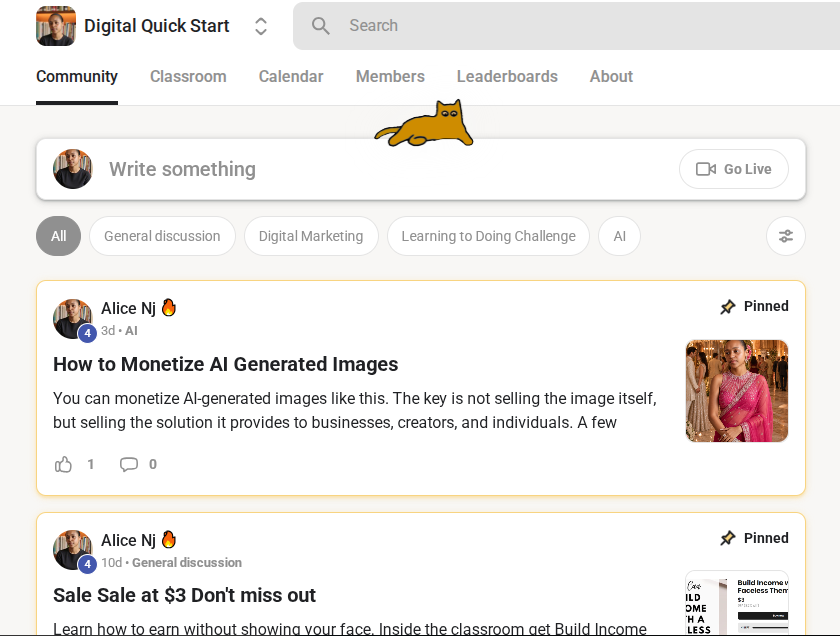
1. The Community Feed
The community feed is the heart of Skool. A clean, distraction-free discussion space where members post updates, ask questions, share wins, and connect with each other. Think of it like a Facebook Group, but without the ads, the noise, and the algorithm deciding what gets seen.
Members can post text, images, and videos. Posts can be organized into categories so the feed stays tidy. And because there’s nothing competing for attention – no external ads, no trending news, no suggested content – conversations tend to be richer and more focused.
2. The Classroom
The Classroom is Skool’s built-in course platform. As a community owner, you can upload videos, PDFs, and documents and organise them into structured modules with individual lessons. Members can track their own progress through the material, and you can see who’s engaging with what.
It’s not the most advanced LMS on the market – there are no quizzes, graded assignments, or certificates – but for coaches and creators who want to deliver solid course content alongside community, it works brilliantly.
3. The Calendar
The Calendar feature lets you schedule live calls, webinars, Q&A sessions, and events directly on the platform. It automatically adjusts for each member’s time zone – a small detail that makes a big difference when your community is global – and members can RSVP directly. Automatic reminders mean fewer no-shows.
4. Gamification – The Feature That Changes Everything
This is where Skool truly separates itself from every other community platform on the market.
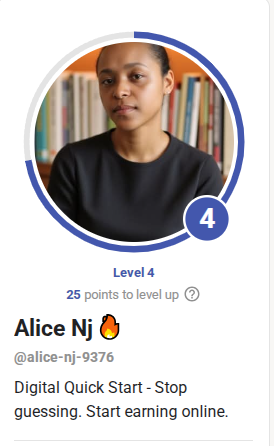
Skool has a built-in gamification system that turns participation into a game. Members earn points when others like their posts, comments, and replies. As they accumulate points, they level up – and their level is visible on their profile for the whole community to see. There’s also a public leaderboard showing the most active and engaged members.
Community owners can also lock certain content or areas behind specific levels – so members are incentivized to engage more to unlock exclusive material.
The result? Communities that stay active, members who keep coming back, and an environment where showing up consistently actually means something. It’s the reason Skool communities tend to feel more alive than Facebook Groups where members often lurk silently.
5. The Member Directory
Every member has a profile where they can share their background, links, and what they’re working on. Members can message each other directly, making Skool genuinely useful for networking – not just learning. This peer-to-peer connection is one of the underrated reasons people stay in Skool communities long-term.
6. Payments
Skool has native Stripe integration, so you can charge for access to your community directly on the platform. You can set up recurring monthly memberships, one-time fees, and free trials. No third-party payment tools, no extra checkout pages – it’s all built in.
7. The Mobile App
Skool has full-featured iOS and Android apps with push notifications, so members can engage with your community from anywhere. This isn’t a stripped-down mobile experience – it’s the full platform on your phone.
Section 4: The Gamification Factor – Why It Changes Everything
If there’s one thing that makes Skool genuinely different from every other community platform, it’s the gamification system. And it’s worth spending a moment really understanding why it matters.
The number one problem with online communities, on any platform, is that people go quiet. They join with enthusiasm, engage for a week or two, and then gradually disappear. The content is still there. The community is still there. But the energy fades.
Skool’s gamification is designed specifically to solve this problem.
When a member posts something and others engage with it, they earn points. When they comment, they earn points. When they reply, they earn points. Those points accumulate over time and their level goes up. Their level is publicly visible, which means showing up consistently is recognized – and that recognition matters to people more than we often admit.
The leaderboard creates a healthy, fun layer of competition. Members can see where they rank, who’s above them, and who’s catching up. For people who are naturally motivated by achievement and recognition – which is most people in growth-oriented communities – this is powerful.
Community owners can also use levels to gate content. Want to save your best material for your most engaged members? Set it to unlock at Level 5. Suddenly engagement isn’t just social – it has a tangible reward.
The practical effect of all this? Skool communities stay active in a way that Facebook Groups rarely do. Members come back not just because they want to learn, but because they’re playing a game – and they want to keep levelling up.
| Real Example The 30-day consistency frame on Skool is a perfect example of gamification in action. Members who show up every day for 30 consecutive days earn a visible frame around their profile photo. It’s a small thing – but it creates a powerful incentive to keep coming back, even on the days when you have nothing particularly brilliant to say. |
Section 5: Why Skool Is Particularly Powerful for Coaches and Consultants
The creator economy is projected to hit $480 billion, and one of the most valuable things a coach or consultant can build is a community around their expertise. Not just a course. Not just a newsletter. A living, breathing space where your clients and audience grow together.
Skool is built for exactly this.
Package Your Expertise in One Place
As a coach or consultant, you likely have knowledge worth teaching – frameworks, processes, strategies, lived experience. Skool lets you package that into a structured course, deliver it alongside a community that reinforces the learning, and host live calls where you can go deeper. Your clients don’t need to log into three different platforms. Everything they need is in one place.
Charge for What You’re Worth
Skool makes it easy to run paid communities. You decide the price, set the access, and Skool handles the payments. Whether you’re charging $47/month for a general community or $497/month for a premium mastermind, the infrastructure is already there.
Retention Over Acquisition
Most coaches obsess over getting new clients. Skool shifts the focus to keeping the clients you already have. When members are engaged, levelling up, connecting with peers, and consistently getting value – they don’t leave (they bring their friends). The gamification, the community, and the live events work together to make your offering genuinely sticky.
Positioning and Authority
Running a focused, high-quality Skool community positions you as the authority in your niche. It’s not just a product – it’s a destination. Members don’t just buy your course; they join your world.
Section 6: What Skool Doesn’t Do – An Honest Look at the Gaps
No platform is perfect, and part of making a good decision is understanding what you’re working with honestly. Skool is deliberately simple by design, and that simplicity comes with some genuine limitations at the time of writing this article.
What Skool Is Missing
- No quizzes, tests, or graded assignments — so it’s not suited for formal education or compliance training
- No course completion certificates — which matter for professional development programmes
- No email marketing tools or automation — you’ll still need a separate email platform. Though send an email when you make a post to all members of your community.
- No native CRM or analytics integrations — reporting is basic
- No funnel builder — if you want complex sales funnels, you’ll need another tool
- No drip content — all course modules are available immediately upon joining
- No built-in video conferencing — live calls require an external tool like Zoom
Who Should NOT Switch to Skool
Skool is probably not the right fit if you need advanced assessment features, formal certification programmes, complex drip course sequences, or a full marketing funnel built into the same platform. In those cases, platforms like Kajabi, Teachable, or a custom LMS may serve you better.
The Honest Verdict
Skool is not trying to be everything to everyone. It’s deliberately simple – and for the coaches, consultants, and community builders it’s designed for, that simplicity is a feature, not a flaw. You can launch a fully functional paid community on Skool in a day. Try doing that with a five-tool stack.
Section 7: How to Get Started on Skool – Step by Step
Getting started on Skool is genuinely straightforward. Here’s a practical walkthrough for your first days on the platform.
Step 1 – Start Your Free Trial
Skool offers a 14-day free trial on both its Hobby and Pro plans. You’ll need a credit card on file to begin, and your trial automatically converts to a paid plan on day 15 if you don’t cancel. Use the full 14 days to explore the platform before committing.
Step 2 – Choose: Free or Paid Community
Decide upfront whether your community will be free (anyone can join) or paid (members pay to access). Free communities are great for building an audience and generating leads. Paid communities are where you monetize. Many creators run both – a free community to attract people and a paid one for deeper access.
Step 3 – Set Up Your Community Profile
Give your community a clear, compelling name and description. Write it for the person you want to attract, not for yourself. Add a strong cover image and a profile photo. First impressions matter – a polished community page converts better than a half-finished one.
Step 4 – Build Your First Classroom Module
You don’t need to have everything ready on day one. Start with one module – your best, most valuable content – and build from there. A focused, well-structured piece of content will always outperform a messy library of everything you’ve ever created.
Step 5 – Add Your First Calendar Event
Schedule a welcome call or a live Q&A for your first members. This signals that the community is active and that you’re present. Even a 30-minute open Q&A can make a huge difference to early engagement and retention.
Step 6 – Invite Your First Members
Don’t wait for perfection before inviting people. Invite your existing audience, your current clients, or people in your network who would genuinely benefit from what you’re building. Early members set the tone and culture of the community, so be intentional about who you invite first.
Step 7 – Post Your Welcome Message
Write a warm, clear welcome post that tells new members exactly what the community is about, what they should do first, and what they can expect from you. Pin it to the top of the community feed so every new member sees it.
Tips for Your First 30 Days as a Community Owner
- Show up daily — even just to like a few posts or leave a comment
- Celebrate early wins publicly — when a member shares a result, make a big deal of it
- Ask questions to spark conversation rather than only posting content
- Respond to every comment in your first few weeks — it builds trust fast
- Don’t obsess over member numbers — focus on making the experience excellent for the people already there
Section 8: Skool Pricing – What It Really Costs in 2026
Skool’s pricing is refreshingly simple compared to most platforms in this space. Two plans. No complex tiers. No per-member fees. Here’s what you need to know.
| Hobby Plan — $9/mo | Pro Plan — $99/mo | |
| Transaction Fee | 10% + $0.30 per sale | 2.9% + $0.30 per sale |
| Members | Unlimited | Unlimited |
| Courses & Videos | Unlimited | Unlimited |
| Admins | 1 (solo) | Unlimited |
| Custom URL | Yes | Yes |
| Affiliate Programme | Yes (40% recurring) | Yes (40% recurring) |
| Free Trial | 14 days | 14 days |
| Best For | Just starting out | Scaling & earning |
Understanding the Transaction Fees
This is where many people get caught out, so it’s worth being very clear:
On the Hobby plan, you pay $9/month but Skool takes 10% + $0.30 on every transaction. At low revenue levels this is fine, but it adds up quickly as you grow.
On the Pro plan, you pay $99/month but the transaction fee drops to 2.9% + $0.30 — which is broadly comparable to standard payment processing rates.
The break-even point is roughly $1,000/month in community revenue. Below that, Hobby saves you money. Above it, Pro becomes the more cost-effective choice.
The Affiliate Programme
Skool runs one of the most generous affiliate programmes in the SaaS space — 40% recurring commission for every person you refer who stays on the Pro plan. That’s $39.60 every month per referral. A handful of referrals and Skool effectively pays for itself.
Is It Worth It?
Think about what $99/month is replacing: a course platform ($50–$200/month), a community platform ($39–$99/month), a scheduling tool ($15–$30/month), and a separate payment processor (2.9% + per transaction). The all-in-one nature of Skool doesn’t just save money – it saves the mental overhead of managing multiple tools.
Section 9: Skool vs. The Competition
Skool isn’t the only platform in this space, and it’s worth knowing how it stacks up against the alternatives before you commit.
Skool vs. Circle
Circle starts cheaper (around $39/month) but as your community grows and you need more features, you’ll likely end up paying $99 or more – often without the same level of integrated features like Skool’s built-in calendar or gamification. Circle offers more customisation, which is great if you love tweaking things. Skool is better if you want to launch fast and focus on engagement rather than configuration.
Skool vs. Mighty Networks
Mighty Networks is a strong platform with solid community and course features, but it’s more complex to set up and the gamification isn’t as deeply embedded as Skool’s. The pricing is also less transparent. Skool wins on simplicity and engagement; Mighty Networks wins on depth of features.
Skool vs. Kajabi
Kajabi is a full business platform — it includes email marketing, funnels, a website builder, and courses. It’s significantly more expensive (starting at $149/month) and more complex. If you need all of those features in one place, Kajabi might be worth it. If community and courses are your core need, Skool is leaner, cheaper, and better at keeping members engaged.
Skool vs. Discord
Discord is great for real-time chat-heavy communities, particularly in gaming and tech. But it has no built-in course delivery, no gamification beyond basic bots, no native payments, and a very different (more chaotic) feel. For professional coaching or course-based communities, Skool is the far stronger choice.
The Bottom Line
Skool wins when your primary goal is an engaged, active community built around learning and connection – and you want to get it running without a technical headache. It’s not the most feature-rich platform on the market, but for coaches and creators who want simplicity, engagement, and results, it’s hard to beat.
Conclusion – Stop Building on Borrowed Land
If there’s one idea at the heart of this guide, it’s this: every hour you spend building a community on Facebook Groups is an hour spent building on a foundation you don’t own.
Facebook can change the algorithm. They can reduce your reach. They can shut your group down. And when that happens – as it has for countless creators before you – you lose everything you built, because none of it was really yours.
Skool gives you something different. A focused, distraction-free space where your community, your courses, your live events, and your revenue all live together under your control. A platform where engagement is rewarded, members stay active, and you don’t need a tech stack worth hundreds of dollars a month to make it work.
Is Skool perfect? No. It doesn’t have email marketing, advanced quizzes, or complex funnels. But for coaches, consultants, and creators who want to build something real around their expertise — a space where people learn, connect, and grow together — it’s one of the best tools available right now.
The creator economy is growing fast. The question isn’t whether you should build a community. The question is where you build it — and whether it will still be yours in five years.
Start your 14-day free trial at skool.com and see what building on solid ground actually feels like.
If you are new and don’t know where to start with earning online see how I transitioned from Tech Writer to Digital Earner
| About This Article This article is part of The Skool Diaries – an ongoing series documenting a real, first-hand journey exploring Skool as a business tool for coaches and consultants. Follow along for honest updates, observations, and lessons learned along the way. |
The Skool Diaries | 2026
Transparency Note: This article contains some affiliate links. If you sign up or purchase through them, I may receive a small commission at no extra cost to you. Your support helps me continue creating free content and resources. Thank you!